Not Sure Where to Start?
Use our free Find Your Fitness Plan tool to build a home workout routine around your current level.
Quick Answer: You can build a real chest with Bodyweight Chest Exercises when you use good form, progressive overload, enough weekly volume, and proper muscle recovery. Push-up variations, dips, decline push-ups, archer push-ups, and slider push-ups train the upper chest, mid chest, lower pec and triceps without any weights.
Key Takeaways
- Bodyweight Chest Exercises can build real strength and size when you progress them over time, not just stay on easy push-ups forever.
- Beginners should start with wall, knee and incline push-ups to learn form before loading up.
- Chest growth also needs rest, protein, chest stretches and a simple plan, not just hard training.
Chest Anatomy: Muscles Worked During Bodyweight Chest Exercises
Your chest is mostly one big fan-shaped muscle called the pectoralis major. Below it sits a smaller muscle, the pectoralis minor, and these are called the pectoralis muscles. The upper chest runs up toward your collarbone, while the mid chest and lower pec form most of what you see in the mirror. Good bodyweight chest exercises work all of these areas from slightly different angles.
Push-ups and dips are not chest-only moves. They also train the triceps, the front shoulders, the serratus anterior along your ribs and the core stabilizers that hold your body straight. That is wwohy bodyweight pressing builds useful, real-world strength.
One honest point: A push-up cannot copy a dumbbell or cable chest fly exactly, because there is no separate fly path for your arms. But wide push-ups and slider push-ups create a similar stretch-and-squeeze feeling across the pectoralis muscle, which is enough to grow the chest at home.
25 Best Bodyweight Chest Exercises
Work through these from easier to harder. Beginners can pick 4 to 5 moves they can do well; advanced trainees can add the explosive and single-arm options.
1. Standard Push-Up
Mid chest, triceps | 3 sets of 8 to 15 reps
Start in a plank with hands slightly wider than your shoulders. Lower your chest near the floor, elbows about 30 to 45 degrees from your body, then press back up. Keep your core tight. This is the base of most chest workouts using body weight.

2. Incline Push-Up
Beginner chest, lower load | 3 sets of 10 to 15 reps
Place your hands on a table, sofa, or sturdy bench. Lower your chest to the surface and press up slowly. The raised hands cut the load, so it is one of the top-rated Bodyweight Chest Exercises for beginners learning full-body push-up form.

3. Knee Push-Up
Beginner chest and triceps | 3 sets of 8 to 12 reps
Drop to your knees with your hands under your shoulders. Keep your hips forward so your body makes a straight line from shoulders to knees. This builds pressing strength before you move up to full standard push-ups.

4. Wall Push-Up
Very beginner activation | 3 sets of 12 to 20 reps
Stand facing a wall with your hands at chest height. Bend your elbows to bring your chest toward the wall, then press away. This is great for seniors, ladies chest exercise users and anyone rebuilding strength after a break.

5. Paused Push-Up
Chest control, time under tension | 3 sets of 6 to 10 reps
Do a normal push-up but pause for 1 to 3 seconds at the bottom. The pause removes momentum and makes the chest work harder without any weight. Keep the pause clean and controlled, not collapsed onto the floor.

6. Decline Push-Up
Upper chest and shoulders | 3 sets of 8 to 12 reps
Put your feet on a chair, step or low bench and keep your body straight. The forward shift loads more body weight onto the upper chest, making this a top pick for upper chest bodyweight exercises. Lower with control on every rep.

7. Parallel Bar Dips
Lower chest, triceps | 3 sets of 6 to 12 reps
Use parallel bars if you have them. Lean slightly forward, lower until your elbows reach about 90 degrees, then press up. Keep your shoulders controlled. This is one of the strongest bodyweight lower chest exercises you can do at home.

8. Ring Dips
Chest, triceps, shoulder stability | 3 sets of 4 to 8 reps
Rings move freely, which makes this advanced. Keep your elbows close, chest slightly forward, and core tight. Only try ring dips once you already own strong bar dips and have healthy, controlled shoulders.

9. Pike Push-Up
Upper chest, shoulders | 3 sets of 6 to 12 reps
Start in an inverted V with your hips high. Lower your head toward the floor, then press back up. It is shoulder-focused but supports upper chest bodyweight workout goals and preps you for harder vertical pressing.

10. Hindu Push-Up
Chest, shoulders, mobility | 3 sets of 6 to 10 reps
Begin in a downward-dog position, swoop your chest forward near the floor, then finish with your chest up. Reset and repeat. This flowing move blends pressing strength training with shoulder and spine mobility in one rep.

11. Wide Grip Push-Up
Outer chest emphasis | 3 sets of 8 to 15 reps
Set your hands wider than your shoulders and lower slowly without flaring your elbows too aggressively. The wider path gives more chest stretch, making this one of the top bodyweight chest exercises without weights for the outer pec feel.

12. Diamond Push-Up
Inner chest, triceps | 3 sets of 6 to 12 reps
Place your hands close together under your chest so your thumbs and index fingers form a diamond. Lower slowly and press up. It hits the inner chest and triceps hard, ideal for a bodyweight chest and tricep workout.

13. Inner/Outer Push-Up
Chest variation and triceps | 3 sets of 8 to 12 alternating reps
Alternate between a close-hand position and a wide-hand position. The close grip loads the triceps more, while the wide grip adds chest stretch. Keep every rep slow and controlled as you switch widths.

14. Floating Plank
Chest stability, core, shoulders | 3 rounds of 20 to 40 seconds
Hold the top of a push-up with elbows slightly bent, not locked. Push the floor away and keep your chest, shoulders, and core switched on. This builds the stability you need for harder bodyweight chest workouts.

15. Stability Ball Push-Up
Chest, core, shoulder stability | 3 sets of 6 to 12 reps
Place your hands on a stability ball, or your feet on it for more challenge. The unstable surface forces your chest and core to work harder to stay balanced. Keep the movement slow, safe, and controlled.

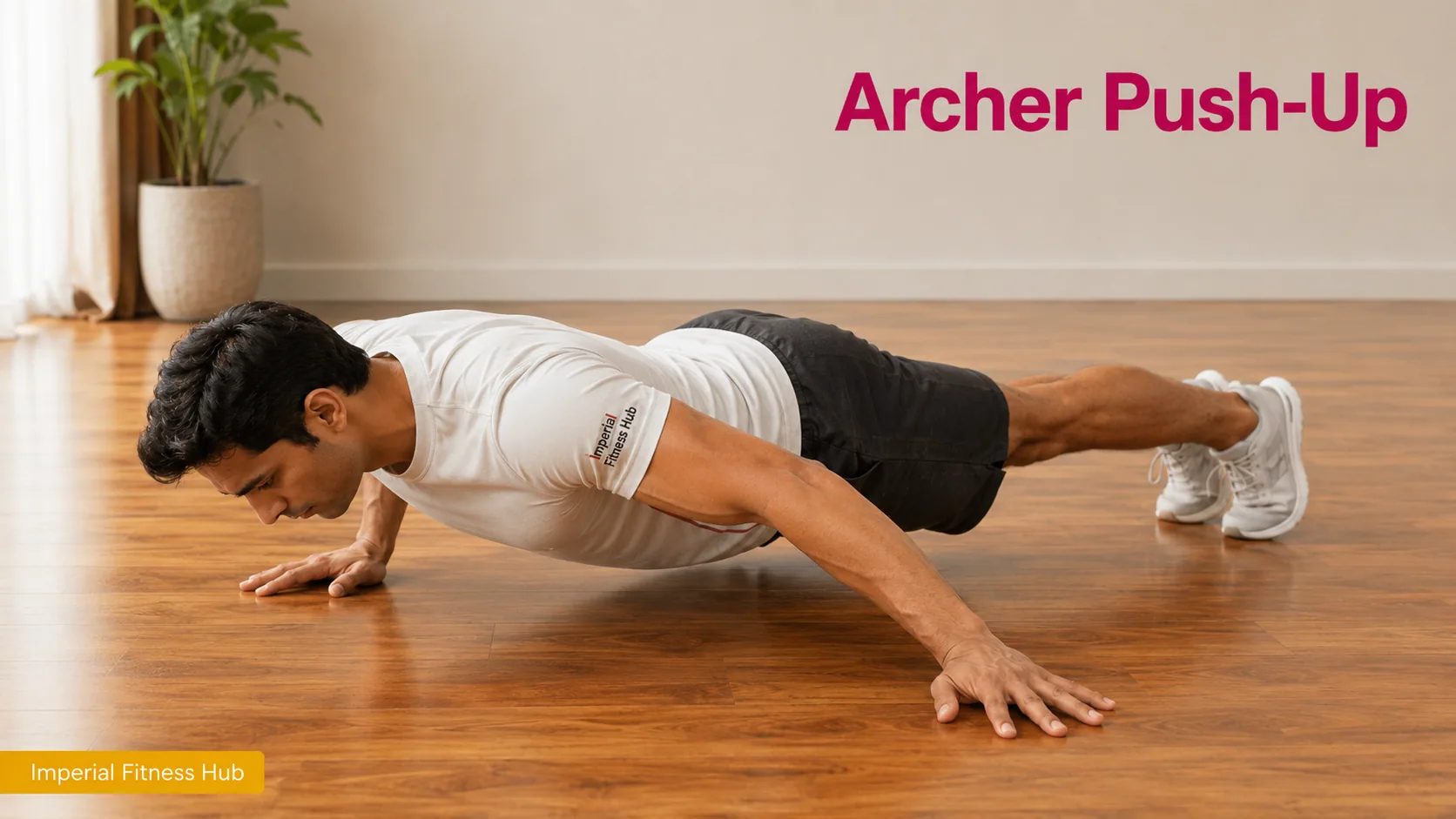
16. Archer Push-Up
One-sided chest strength | 3 sets of 4 to 8 reps each side
Set your hands wide. Lower toward one hand while the other arm stays straighter, then push back to center and switch sides. This shifts most of the load to one side and is a strong step toward one-arm pressing.
17. Assisted One-Arm Push-Up
Advanced chest strength | 3 sets of 3 to 6 reps each side
Place one hand on the floor and the other on a raised surface or slider for support. Lower slowly and press up mainly through the working side. Keep your hips square and controlled so you do not twist.

18. Explosive Plyo Push-Up
Power, fast-twitch fibers | 3 sets of 5 to 8 reps
Lower into a push-up, then press hard enough that your hands leave the floor slightly. Land softly with bent elbows. This is advanced and should only follow solid standard push-ups, because it loads the wrists and shoulders.

19. Clapping Push-Up
Chest power and speed | 3 sets of 3 to 6 reps
Perform an explosive push-up and clap your hands before you land. Keep reps low and quality high, and stop the set as soon as your speed drops. This is a power move, not a beginner exercise.

20. Superman Push-Up
Advanced explosive chest and core | 3 sets of 2 to 5 reps
Explode from the bottom so both your hands and feet leave the floor at once. This is a high-level move that needs strong wrists, shoulders and core. Use it only after you have mastered plyo push-ups.

21. Spiderman Push-Up
Chest, core, obliques | 3 sets of 6 to 10 reps each side
As you lower, draw one knee toward the same-side elbow. Press back up and alternate sides. This keeps the chest under tension while adding real core and oblique work, all from one push-up position.

22. Typewriter Push-Up
Chest endurance, side-to-side strength | 3 sets of 4 to 8 reps each side
Start in a wide push-up position. Lower to one side, shift across while staying low, then press up or continue gliding side to side. The long tension range makes this an advanced chest builder.

23. Plank to Push-Up
Chest, triceps, core | 3 sets of 8 to 12 reps
Start on your forearms, then press up one hand at a time into a high plank and lower back down. Keep your hips steady and avoid rocking. It blends chest work with strong core control in one move.

24. Rotation Push-Up
Chest, shoulders, core rotation | 3 sets of 6 to 10 reps each side
Do a push-up, then rotate into a side plank and reach one arm toward the ceiling. Return and repeat on the other side. This improves shoulder control and core stability alongside chest strength.

25. Slider Push-Up
Chest stretch, chest fly feeling | 3 sets of 6 to 10 reps each side
Put one hand on a towel or slider. As you lower, slide that hand outward like a chest fly, then pull it back as you press up. This mimics some cable chest fly tension without any weights.

What the Research Says About Bodyweight Chest Training
Push-ups are not a watered-down option. A 2017 training study published in the Journal of Exercise Science and Fitness found that push-up training performed to fatigue produced gains in muscle size and strength similar to low-load bench pressing over the study period. In other words, your own body weight can be a real growth tool.
Push-up ability also tracks with overall health. A 2019 study published in JAMA Network Open found that men who could complete more than 40 push-ups had a markedly lower risk of cardiovascular events than men who managed fewer than 10. Pressing strength reflects more than just chest size.
Finally, progression drives results. The American College of Sports Medicine position stand, published in Medicine and Science in Sports and Exercise (2009), stresses that muscles adapt only when demand keeps rising. With bodyweight training, that means harder variations, more reps, slower tempo, or shorter rest.
How to Make Bodyweight Chest Exercises Harder Without Weights
Once standard push-ups feel easy, you can keep progressing without a gym. Use these levers to add difficulty:
- Slow the tempo. Take 3 to 4 seconds to lower each rep.
- Add a pause. Hold the bottom for 1 to 2 seconds before pressing.
- Raise your feet. Decline angles load the chest more.
- Shorten rest. Less rest between sets raises the challenge.
- Go single-arm. Archer and assisted one-arm push-ups multiply the load on one side.
You can also add light tension tools at home. Our guide to resistance band chest exercises shows how a band over your back adds resistance to any push-up.
Bodyweight Chest Exercises vs Weighted Chest Exercises
| What to compare | Bodyweight Chest | Weighted Chest (Gym) |
|---|---|---|
| Cost | Free, no gear needed | Needs gym gear or a gym |
| Good for beginners | Yes, easy to make harder or easier | Okay, but needs setup and a spotter |
| Making it harder | Tricky once you get strong | Easy, just add more weight |
| Stress on joints | Usually gentler | Tougher on heavy lifts |
| Best for | Working out at home, travel, staying fit | Getting as big and strong as possible |
Common Mistakes to Avoid in Bodyweight Chest Exercises
- Sagging hips.
- Half reps.
- Flaring elbows are too wide.
- Training chest every single day.
- Ignoring back and shoulder training.
- Skipping chest stretches and rushing into advanced moves.
- No real plan. Random sets stall your progress.
“The best resistance training program is the one you’ll actually stick with.” – Stuart M. Phillips.
Conclusion
You do not need a gym to build a strong chest. With consistent bodyweight chest exercises, smart progression and proper recovery, your own body weight is enough to get real results at home. Beginners should start simple with wall, incline and knee push-ups, then build toward full standard reps. Remember that growth happens between sessions, so protect your rest days, add regular chest stretches, and stay consistent week after week. Pair your chest work with back and shoulder training for balanced strength and healthy posture.
Frequently Asked Questions
Q1. Can I build chest without weights?
Yes. Standard push-ups, decline push-ups, dips, slider push-ups, and archer push-ups load the chest hard enough to drive growth. The key is to keep making the moves harder, since your body adapts quickly to anything that stays the same.
Q2. How long does it take to see results from bodyweight chest exercises?
Most people feel greater within 3 to 6 weeks and start seeing visible changes around 6 to 12 weeks, as long as they train 2 to 3 times a week and keep adding difficulty. Eating enough protein and getting good rest will speed up how fast your chest grows.
Q3. What are the best bodyweight exercises for the lower chest?
Parallel bar dips, ring dips, decline push-ups, and slider push-ups. Leaning your torso forward during dips places more tension on the lower pec, which is why dips are a favorite for the lower chest area.
Q4. How many times a week should I do Bodyweight Chest Exercises?
Two to three times per week suits most people, with at least one rest day between hard chest sessions. That gives the muscle time to recover and grow while still giving you enough weekly volume to improve.
Q5. Do push-ups work the upper chest?
Yes, especially decline push-ups and pike push-ups. Raising your feet or moving toward a vertical press shifts more of the load onto the upper chest and shoulders than a flat standard push-up does.
Q6. What can I use at home if I do not have dip bars?
You can use two strong chairs of the same height, a sturdy desk, a bed frame with a chair, or your kitchen counter instead. These everyday things let you work your chest and triceps with no special gear.